
Kenneth Carnesi Explores How Two Decades Of Change Have Redefined The Bill Of Rights In New Book
Posted in Uncategorized
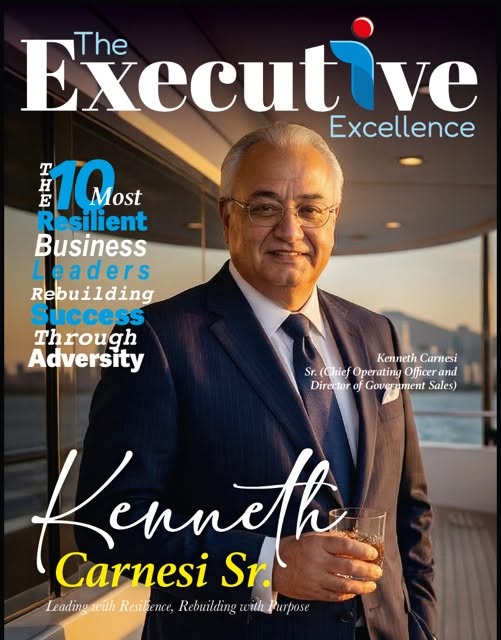
Inside The BEAD Program: How Anaptyx And Kenneth Carnesi Are Helping Small Vendors Find Opportunity
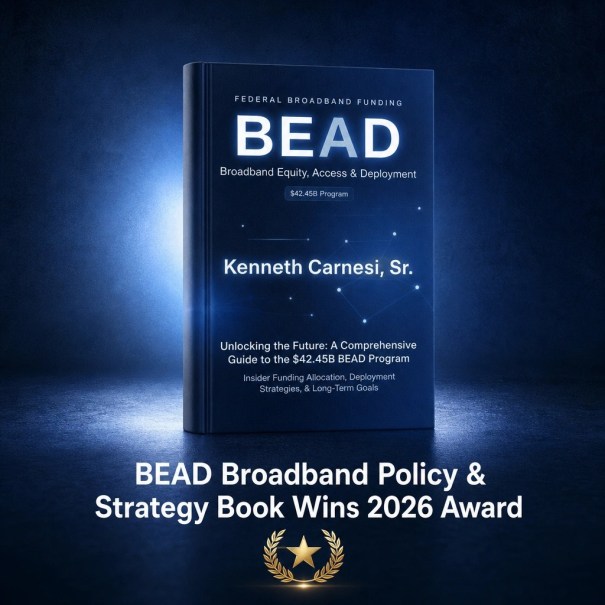
Posted in Uncategorized
Kenneth Carnesi, Sr. – Member, Society of Authors – London, UK – Non-Fiction Author – Inspirational, Business, and Legal Commentary Genres – August 2026

Posted in Uncategorized
Celebrating Kenneth Carnesi as an Industry Icon 2026.
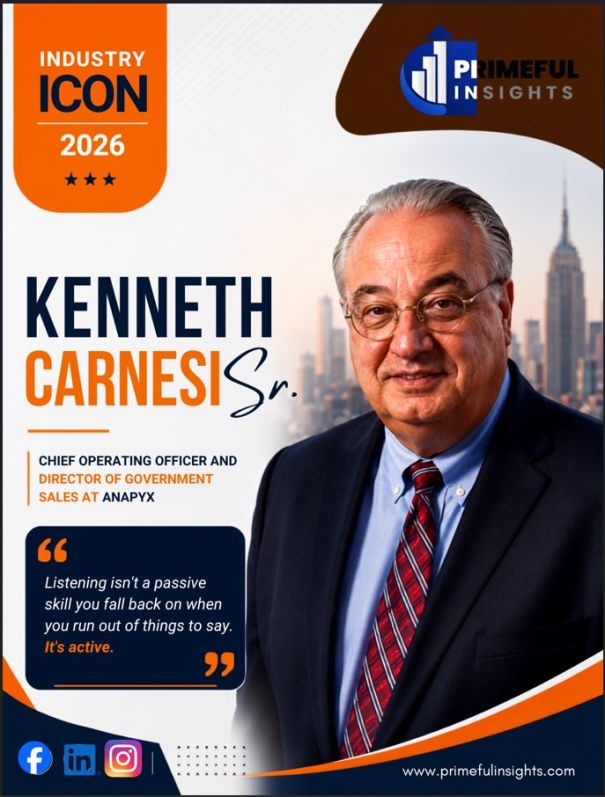
Beyond the Pivot: Kenneth Carnesi Sr. on Leadership, Resilience, and the Discipline to Keep Learning
A long career is rarely built in a straight line. It is shaped by unexpected turns, difficult seasons, unfamiliar environments, and the willingness to begin again when circumstances demand it. For Kenneth Carnesi Sr., Chief Operating Officer and Director of Government Sales at Anaptyx, that journey has crossed law, international business, technology, government sales, authorship, and mentorship. What connects those chapters is not a particular industry or title, but a consistent belief in learning, integrity, and showing up when the outcome is uncertain. From growing up in Brooklyn to working across Europe and the former Soviet republics, and eventually building a career in managed Wi-Fi and hospitality technology, Kenneth has learned that adaptability is not simply about changing direction. It also requires the humility to remain teachable.
“I think the moment you decide you’ve learned enough is the moment you start becoming irrelevant.”
That mindset has become central to how Kenneth approaches leadership, business, and life.
The Defining Moment That Changed Everything
Some of the most important chapters in a career begin with disruption rather than opportunity. For Kenneth, one such moment came in 2004, when he lost his career, financial stability, and important relationships within a relatively short period. There was no ready-made roadmap for what came next. He began writing instead. What started as a way to process personal upheaval eventually became a resilience trilogy: After The Fall, Get Back Up, and Unfinished Business. Fourteen books later, writing has become another expression of Kenneth’s professional and personal philosophy.
The lesson was not that setbacks can simply be overcome through determination. Recovery, he learned, happens gradually, through patience and consistent action.
“Getting back up is a process built one honest day at a time, not a single act of willpower.”
That experience continues to influence the way Kenneth thinks about leadership. Difficult periods, in his view, do not have to define a person or an organisation. They can become part of the foundation from which something stronger is built.
A Career Built Across Boundaries
Kenneth’s early life in Brooklyn instilled in him a strong respect for education and integrity. He earned his Juris Doctor from New York Law School, but traditional courtroom practice was never his ultimate destination. He was more interested in the space where law, commerce, and international affairs met. Studies in International Banking at Harvard and Entrepreneurship and Startups at Wharton broadened that perspective. His legal education gave him discipline and precision, while his business education encouraged him to think about building rather than simply advising. That combination eventually led him into international consulting, where he worked with companies and governments across Europe and countries including Kazakhstan, Turkmenistan, Uzbekistan, Georgia, and Russia.
The experience challenged assumptions he had developed in New York.
“You can be right on paper and still be wrong in a room if you don’t understand the culture and incentives of the people across the table.”
International business taught Kenneth that trust cannot always be approached through the same framework. Relationships, patience, cultural awareness, and the ability to listen often mattered as much as the strength of a proposal. Those lessons stayed with him as he moved into technology and government sales.
Leadership Begins With Listening
Across every stage of his career, Kenneth has come to see listening as one of the most important, and hardest-earned, leadership skills. Early in his career, he admits, he sometimes confused persuasive communication with effectiveness. He could make a strong argument and leave a room feeling that he had succeeded without necessarily understanding what the other side actually needed.
His international experience changed that.
“Listening isn’t a passive skill you fall back on when you run out of things to say. It’s active.”
That distinction now shapes how Kenneth approaches negotiations, mentoring, government sales, and client relationships. For him, listening means being willing to reconsider his own position rather than simply waiting for an opportunity to respond. It is also part of what makes adaptability possible. When professionals become too attached to what they already know, change can become threatening. Staying curious leaves room to learn.
Leading Through an Uncertain Environment
Today, Kenneth applies those principles at Anaptyx, where he serves as Chief Operating Officer and Director of Government Sales within the managed Wi-Fi and hospitality technology sector. Technology has reinforced another lesson: speed matters. Systems evolve quickly, and customer expectations can move even faster. Waiting for complete certainty can mean waiting too long.
His approach is grounded in preparation and responsiveness. The objective is not to predict every change, but to build the organisational discipline to respond when change arrives. That philosophy was tested severely during the COVID-19 pandemic. With hospitality representing a core part of Anaptyx’s market, the sudden collapse in hotel activity created an obvious threat. Properties were closing or operating at sharply reduced capacity, directly affecting demand for managed connectivity services.
Kenneth’s response was not to abandon the fundamentals. The company focused on transparency with clients, maintaining service quality, supporting properties where possible, and keeping teams aligned despite constantly changing circumstances.
“Your reputation is your greatest asset, and you build or lose it fastest during the moments nobody is forcing you to do the right thing.”
The company emerged from that period stronger, later securing a 20-year GSA Schedule 70 federal contract and earning recognition as a top wireless internet service provider for three consecutive years. For Kenneth, however, those outcomes matter because of what they demonstrate: disciplined leadership during difficult conditions can create resilience that lasts long after the crisis itself has passed.
Learning Beyond the Job Description
Kenneth’s commitment to learning extends beyond business. He mentors young attorneys and entrepreneurs, volunteers with the Family Justice Center to raise awareness around domestic violence, and continues to write. Each experience offers a different form of education.
Mentoring keeps him questioning assumptions because younger professionals often ask questions that established leaders may have stopped asking themselves. His volunteer work has provided lessons in resilience and human behaviour that no formal business qualification could replicate.
At this stage of his career, learning is no longer primarily about advancement.
“Curiosity, for me, has become less about ambition and more about responsibility.”
That sense of responsibility also informs his approach to authorship. His books are intended not as prescriptions, but as reminders that people can survive difficult chapters without allowing those chapters to define the rest of their story.
A Future Built on Adaptability
Looking ahead, Kenneth does not suggest that professionals should try to eliminate uncertainty. He believes they should become better at navigating it. His advice to younger professionals is straightforward: get comfortable with complexity, protect your reputation, honour commitments, listen carefully, and remain willing to become a beginner again. His own career provides the evidence behind that philosophy. Law led to international business. International experience opened new perspectives. Technology created another chapter. Authorship emerged from adversity, while mentorship became an extension of what he had learned.
None of those transitions followed a perfectly predictable plan.
“Stop treating change as the exception and start treating it as the baseline.”
That may be the clearest lesson running through Kenneth’s career. A meaningful professional life is not defined by avoiding disruption or remaining within a single discipline. It is defined by the ability to learn, adapt, contribute, and keep moving when circumstances change. His story offers a different definition of success. It is not simply about the positions held, businesses built, contracts secured, or books written. It is about what remains consistent underneath all those chapters: integrity, curiosity, resilience, and the willingness to keep learning.
Perhaps most importantly, it is about understanding that a setback is never necessarily the end of the story. For Kenneth, it became the beginning of another one.
Best Treatment of Forgiveness Booky Award to Kenneth Carnesi Sr.’s Inspirational Book, “The Weight I Left Him”

I won a Booky: Best Treatment of Forgiveness Booky for The Weight I Left Him by Kenneth Carnesi, Sr.. https://www.bookyawards.com/winners/the-weight-i-left-him-kenneth-carnesi-sr-774
Posted in Uncategorized
The Patent He Abandoned Got Cited by Mastercard. Now It’s Getting an Award Too.
Posted in Uncategorized
Rev. Kenneth Carnesi, Sr., Celebrates 11-Year Anniversary of Becoming an Ordained Minister.

“Greetings, Rev. Kenneth Carnesi,
Here’s a milestone worth celebrating: it’s now been 11 years since you officially became an ordained minister! As we raise a virtual glass to this exciting occasion, we just wanted to reach out and see how things are going. May God’s Blessings continue to follow your work.”
Posted in Uncategorized



You must be logged in to post a comment.